| |
| Wednesday, 28 October 2026 |
| The Art of Atonement: how Germany commemorates the Second World War |
| Angela Findlay |
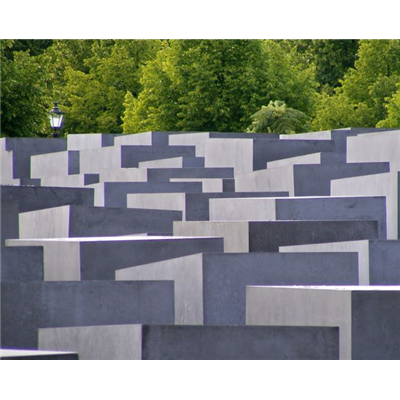 |
Relatively little is known in this country about Germany’s complex post WW2 process of ‘coming to terms’ with the atrocities of it’s past and the ‘counter-memorial’ movement of the eighties which continues today. Traditional monuments and memorials were inappropriate. How does a nation of former persecutors mourn it’s victims and keep the memories and lessons of the past alive? Artists created art forms focussed on apology and atonement rather than commemoration of their own losses. The results are inspiring. |
|
| Wednesday, 25 November 2026 |
| The Glasgow Boys: Painting in Scotland 1875 - 1914 |
| Julian Halsby |
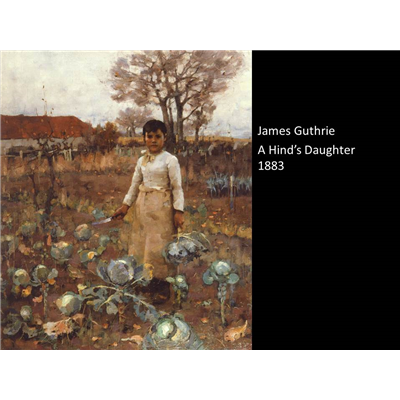 |
The Glasgow Boys were a group of young Scottish artists who revolutionised Scottish painting by aligning it with mainstream Europe. Inspired by France, many studied in Paris or painted together at Grez-sur-Loing, adopting techniques influenced by Jules Bastien-Lepage. Bound by friendship as well as shared artistic ideas, they developed a bold, energetic style marked by thick paint, strong colours and the use of large square brushes. |
|
| Monday, 07 December 2026 |
| Christmas Lecture and Lunch:
Three Wise Men, Gold, Frankincense and Myrrh |
| Christopher Bradley |
 |
Our popular Christmas Lunch and Lecture will again beheld at the Thurlestone Hotel - look out for more details The term Magi refers to Zoroastrian priest-sages, anonymous wise men who were specialists in medicine, religion and astronomy, who travelled from ‘the East’. Tradition has placed the number of Magi at three, relating to gold, frankincense, and myrrh, but earlier versions has the number between two and thirty. The Adoration of the Magi is one of the most popular religious subjects but how accurate are the depictions of Melchior, Caspar and Balthazar? Empress Helena’s attempts to find traces of the Magi led her envoys around the Middle East, taking us from Persia and Constantinople to Milan and finally Cologne. |
|
| Wednesday, 27 January 2027 |
| A Life Among Plants - where art and science meet on equal terms |
| Timothy Walker |
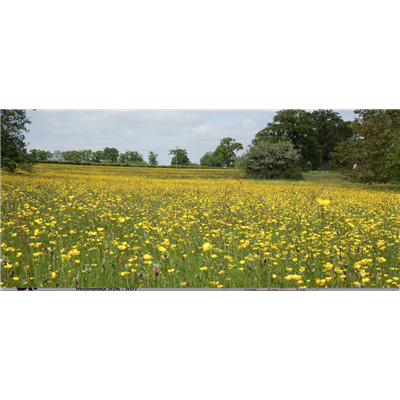 |
After more than half a century of growing and studying plants, it has become clear to our lecturer that gardens are places where people meet plants for myriad reasons including art, science, and fun. There is however, another dimension to our relationship with plants which is more personal and spiritual. This talk looks at how plants have impacted on his life and the lives of many other people. |
|
| Wednesday, 24 February 2027 |
| "Imagine If You will.....": creativity and originality in the age of Artificial Intelligence |
| Justin Reay |
 |
This very topical lecture examines how human creativity and originality are being reshaped by the rise of Artificial Intelligence. Drawing on recent research into creativity, it explores concerns that machine learning may influence or even diminish original thought whilst also highlighting AI’s potential as a powerful tool for innovation and it’s benefits across a wide range of academic fields - from science and medicine to social sciences and humanities and it’s exciting role in painting, sculpture, architecture, video games and film. |
|
| Wednesday, 24 March 2027 |
| A Truly Cultured Woman is as Rare as the Phoenix: the life and work of Isabelle D'Este |
| Sarah Dunant |
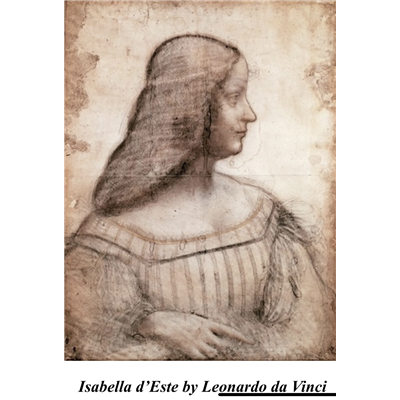 |
In an age where women had little public power, Isabella d’ Este (1474 – 1539) stands out as a formidable figure. She was one of the first and greatest female patrons and art collectors of the Renaissance. And her court in Mantua was filled with writers and poets of distinction. Her clever, educated and entitled voice sings out from thousands of letters which she composed in her meticulously designed study, and images – from Da Vinci to Titian – bring alive a woman whose eye for fashion was every bit as keen as her eye for art. |
|
| Wednesday, 28 April 2027 |
| Why Vienna? |
| Emma Johnson |
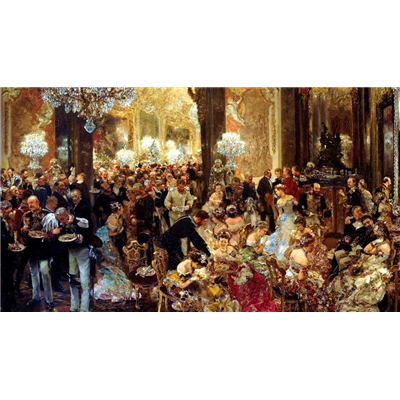 |
Mozart, Haydn, Gluck, Beethoven, Schubert, Brahms, Strauss, Mahler, Bruckner, Schoenberg – it reads like a list of the great and good in classical music – but the amazing thing is that every one of these musical geniuses lived and worked in Vienna. With slides showing Viennese art and architecture as well as audio excerpts by Mozart, Beethoven, Brahms, Schubert, Johann Strauss and Mahler, this talk brings Vienna in its heyday to life. |
|
| Wednesday, 26 May 2027 |
| The Making of Landscape Photography |
| Charlie Waite |
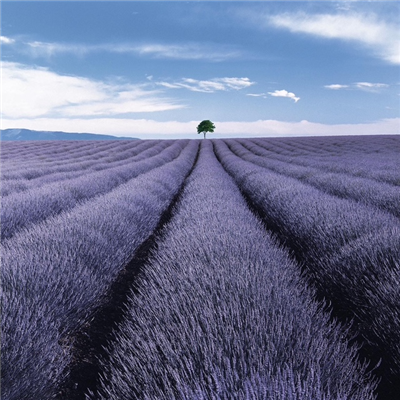 |
A fully illustrated talk with in excess of 60 images exploring the relationship between the making of an image and the way in which it is perceived by the viewer. Further discussion around the eye and the brain being an extraordinary double act made up of visual references and intellectual interpretation. |
|
| Wednesday, 23 June 2027 |
| Battersea Power Station |
| Ian Swankie |
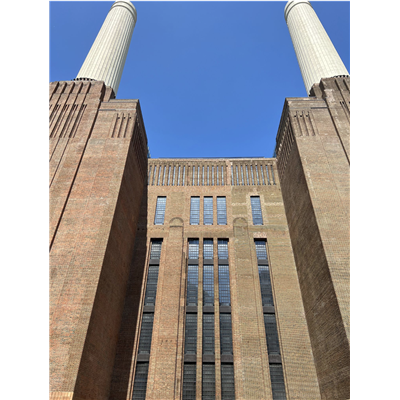 |
This is a talk about just one building. It has 60 million bricks, four chimneys and an amazing story to tell. Planned in the 1920s, the massive power station operated for fifty years but was then abandoned for the next forty years while dozens of ideas were proposed for its use. It is now a Grade 2* listed building and has been brilliantly converted into a landmark development including residential, retail, offices and leisure which all still reflect its industrial heritage. In this sumptuously illustrated talk, Ian will take us on an armchair tour of this famous site. |
|